Effective conservation has always shared an intimate relationship with population genetics, and that relationship has become all the more important in the genomic era. Genomics, coupled with well-planed field collections and deep knowledge of ecology and natural history, can and does inform us about population structure, local adaptation, inbreeding depression, and hybridization, among many other key topics. My research aims to address each of these, with equal parts of: (1) forward-in-time landscape and environmental modelling, to map habitat suitability and connectivity, and predict how they will change under different climate change scenarios; (2) population genomics, to quantify population structure, neutral and adaptive genetic diversity, and inbreeding depression within species; and (3) consultation across academic institutions and regulatory agencies, to develop adaptive management strategies that translate our best science into conservation policies. Insects have been largely neglected in landscape and conservation genomics research initiatives, and we are now working hard to ameliorate critical knowledge gaps.
I am currently working on conservation and landscape genomics of about a dozen species distributed throughout North America. Much of my research on butterflies and damselflies is associated with the California Conservation Genomics Project (see descriptions below), and makes an important contribution to conserving some of California’s most imperiled insect species. We also have projects on a number of North American swallowtail butterflies, including the Rocky Mountain Parnassian (Parnassius smintheus) and the Old World Swallowtail (Papilio machaon, see figure below) that are addressing conservation genomics of insects at a continental scale.

Case study: a curiously isolated hairstreak butterfly
A particularly interesting project of ours applies whole-genome conservation genomics to the Half-moon Hairstreak (Satyrium semiluna), a federally endangered species in Canada. A small, unique population persists in Waterton Lakes National Park, Alberta, isolated from other populations by more than 400 km. Genetic rescue, or the translocation of individuals among populations to augment gene flow, is currently being explored to help ameliorate inbreeding depression and loss of adaptive potential in this small and isolated population.
Two years ago, there were no genomic resources available for this species. Since then, we have worked with both the Parks Canada and the Wilder Institute/Calgary Zoo to generate the first chromosome-level genome assembly and whole-genome resequencing data for the species. Our work has revealed that the Alberta population is very genetically distinct, having been isolated for up to 40,000 years. This population is characterized by low genetic diversity and a high prevalence of inbreeding, yet it persists without evident inbreeding depression—likely due to genetic purging of deleterious alleles. Additionally, ecological niche modeling shows that the population occupies an environment distinct from all other S. semiluna populations, with unique climatic associations, host plant use, and ant mutualisms. These findings suggest that genetic rescue could be harmful rather than beneficial, possibly introducing deleterious recessive alleles that have been purged from this population and and disrupting local adaptations.
Across all studies, our research demonstrates how integrating genomic and ecological approaches can refine conservation strategies. While genetic rescue remains a key tool for many imperiled species, cases like S. semiluna highlight the importance of evaluating genetic and ecological risks on a species-specific basis. As environmental conditions continue to change, ongoing monitoring will be crucial to determining when intervention might become necessary to maintain adaptive potential in this uniquely isolated population.

California Conservation Genomics Project
The California Conservation Genomics Project is a state-funded initiative with a single goal: to produce the most comprehensive, multispecies, genomic dataset ever assembled to help manage regional biodiversity. As part of my UCLA La Kretz postdoc fellowship, I am the leading conservation genomics projects for six important insect species in Western North America:
1. Parnassius behrii (Sierra Nevada Parnassian)
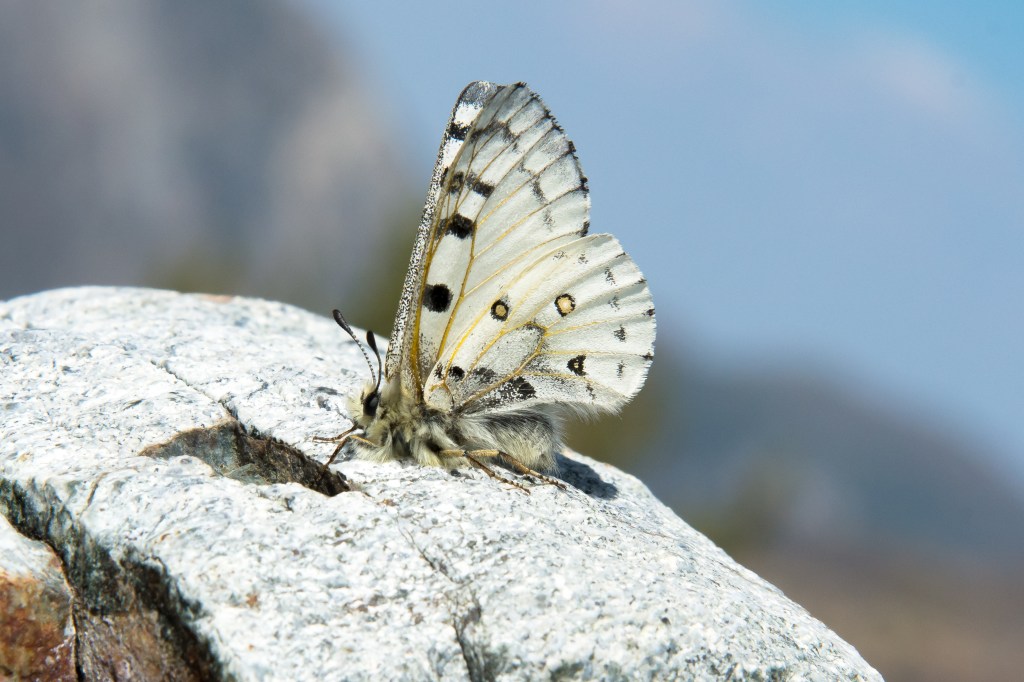
The Sierra Nevada Parnassian (Parnassius behrii) is a large, white butterfly, endemic to the central and southern regions of the Sierra Nevada mountain range. These butterflies are easy to love for their exuberant animation across alpine meadows and scree slopes. Unfortunately, P. behrii and their high-elevation habitats are particularly sensitive to changing climatic conditions. As temperature warm and treelines continue to advance up mountain slopes, some P. behrii populations may be able track their climatic niche by similarly moving upslope. However, many populations already occur near mountain tops, limiting their potential for elevation shifts. Diversification models show that Parnassius have been quite sensitive to changes in climatic conditions over the past 10,000 years, with extinction rates increasing with higher temperatures. Due to its restricted range and high habitat specificity, P. behrii is the most vulnerable North American Parnassius species. It’s only known larval host plants are Stonecrops (Sedum spp.), which are generally restricted to alpine meadows and rocky outcrops. Available data suggest that many P. behrii populations have been declining or have gone extinct in recent decades.
Why the species was selected: Parnassius behrii is likely to become a species of conservation concern as habitat and climatic conditions continue to change in alpine environments. Coupling whole-genome sequence data with forward-in-time landscape and environmental modelling will allow us to predict how these changes are likely to affect the persistence of individual populations and the entire species. This information can be used to inform future translocation and reintroduction efforts, should they be required.
2. Colias behrii (Sierra Sulphur Butterfly)

The Sierra Sulphur (Colias behrii) is a small, green butterfly that is endemic to wet, high-elevation meadows of the Sierra Nevada mountain range. This species is easily identified, as it is the only green sulphur that occurs in the region. Compared to the two other butterflies endemic to the Sierra Nevada (Parnassius behrii and Oeneis chryxus ivallda), C. behrii is relatively widespread and abundant. However, the long-term persistence of many populations is still threatened by warming and drying climatic conditions. Larvae feed on host plants that are associated with permanently-soaked, open meadows, including Blueberries (Vaccinium spp.), gentian (Gentiana newberryi), and a number of plants of the heath family (Ericaceae). Observers fortunate to frequent these meadows during the flight season (mid-summer) can likely get a close look at this wonderful species— C. behrii is notably less skittish than most other butterfly species in the region.
Why the species was selected: Colias behrii is likely to become a species of conservation concern as habitat and climatic conditions continue to change in the Sierra Nevada. Whole-genome sequence data will allow us to infer connectivity among isolated populations, as well as identify fine-scale population structure and genomic signatures of local adaptation. These data, coupled with forward-in-time landscape and environmental modelling, will be used to identify populations that are particularly threatened by changing habitat and climatic conditions.
3. Oeneis chryxus ivallda (Ivallda Arctic Butterfly)

The Ivallda Arctic (Oeneis chryxus ivallda) is a cryptically colored butterfly, endemic to the Sierra Nevada mountain range. Compared to other butterflies endemic to the region (Parnassius behrii and Colias behrii), O. c. ivallda occurs in the smallest populations and at the highest elevation. Fun fact: I recently discovered a previously unrecorded O. c. ivallda population at the summit of Mount Whitney (4421 m). This marks the highest known butterfly population in North America.
One of the most fascinating characteristics of O. c. ivallda is its semivoltine life cycle, wherein larvae diapause for two consecutive winters and adults emerge only once every two years. However, O. c. ivallda may be observed every year in some locations, meaning there are two distinct, sympatric populations that breed in different (even vs. odd) years. The larval host plants of O. c. ivallda are undetermined, but, like other Oeneis spp., are likely grasses or sedges. The only glimpse an observer is likely to get of O. c. ivallda is a flash of dull orange and brown, as they scare an unsuspecting individual up from similarly colored rocks on an alpine ridge or scree slope. Despite the low detectability of this species, long-term monitoring suggests that it is of conservation concern, with many populations declining or disappearing all together.
Why the species was selected: Small population sizes and high habitat specificity make O. c. ivallda particularly sensitive to climate change and climate-induced habitat loss. Whole-genome sequence data will be used to resolve fine-scale population structure, identify signatures of local adaptation, and assess relative levels of inbreeding in isolated populations. Resulting data can inform genetic rescue – the deliberate translocation of individuals between populations to bolster genetic diversity and alleviate inbreeding depression. Further, coupling our genomic data with forward-in-time landscape and environmental modelling will allow us to assess whether the subspecies should be considered for listing as an endangered. These research goals have been identified as key conservation needs by our U.S. National Park Service partners.
4. Apodemia mormo (Mormon Metalmark Butterfly)
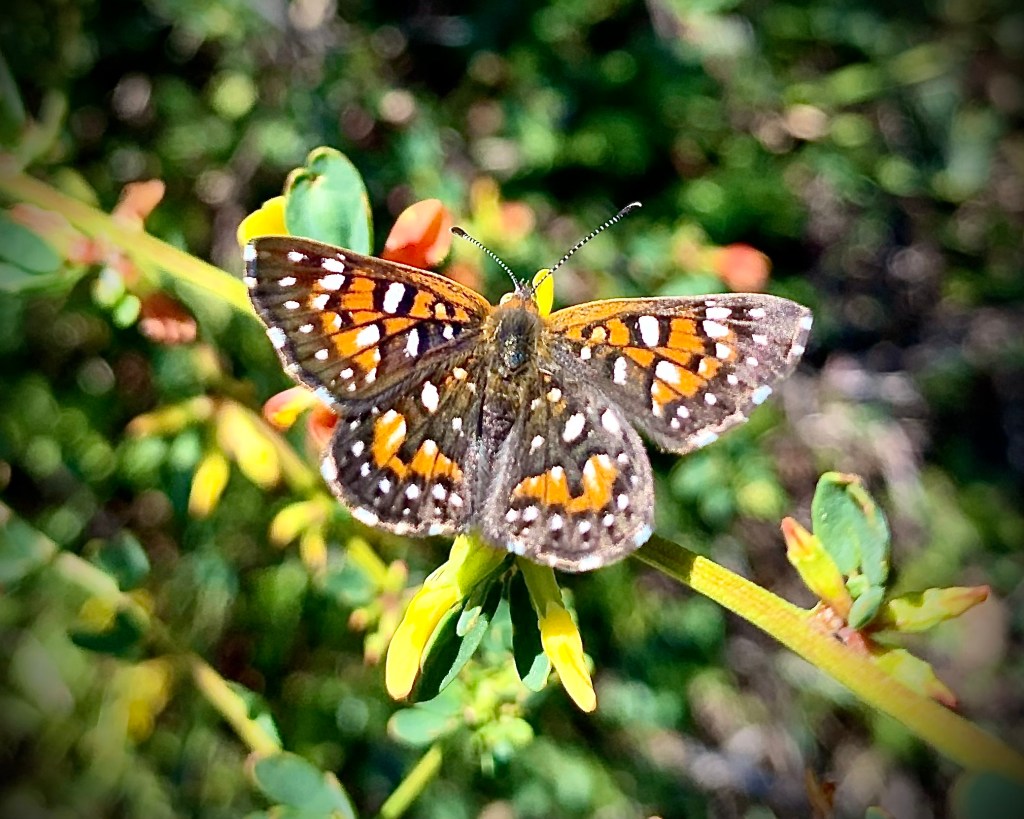
The Mormon Metalmark Butterfly (Apodemia mormo) is one of California’s only representatives of the family Riodininae. Its taxonomy is not well resolved, and we collectively refer to A. mormo and A. virgulti in California as A. mormo. The range of A. mormo spans much of southwestern North America, from southern British Columbia, Canada to northern Baja California and Sonora, Mexico. In California, A. mormo occurs in metapopulations distributed from sea level all the way up to 2500 m. Populations can therefore differ greatly in local habitat and climatic conditions. Larvae feed on a diversity of Wild Buckwheats (Eriogonum spp.), and distributions of A. mormo populations are principally limited by occurrences of these plants. Observers lucky enough to catch a glimpse of A. mormo will note they are particularly mesmerizing to watch fly, often looping in circles and even completing figure-eights. When perched, their complex and beautiful wing patterns will impress any butterfly enthusiast. Throughout California, many A. mormo populations are declining due to habitat loss and climate change, making it a species of conservation concern. The federally listed subspecies A. m. langei occurs exclusively in the Antioch Dunes National Wildlife Refuge, California, and is among the most imperiled butterflies in the world. Our genomic inferences will be critical to evaluating whether genetic rescue is required to alleviate inbreeding depression and loss of adaptive variation in this A. m. langei.
Why the species was selected: There is a clear conservation need to resolve the taxonomy of A. mormo and A. virgulti in California. Similarly, the genomic and ecological distinctiveness of the endangered subspecies, A. m. langei, requires re-evaluation using modern genomic methods. Whole-genome sequence data will allow us to identify fine-scale population structure local adaptation to ecological and environmental conditions that has rapidly evolved since population declines started within the last century. This information will be used to ensure translocation and reintroduction efforts focus on populations that are most compatible. These research goals have been identified as key conservation needs by our U.S. Fish and Wildlife Service (USFWS) partners.
5. Euphydryas editha (Edith’s Checkerspot Butterfly)
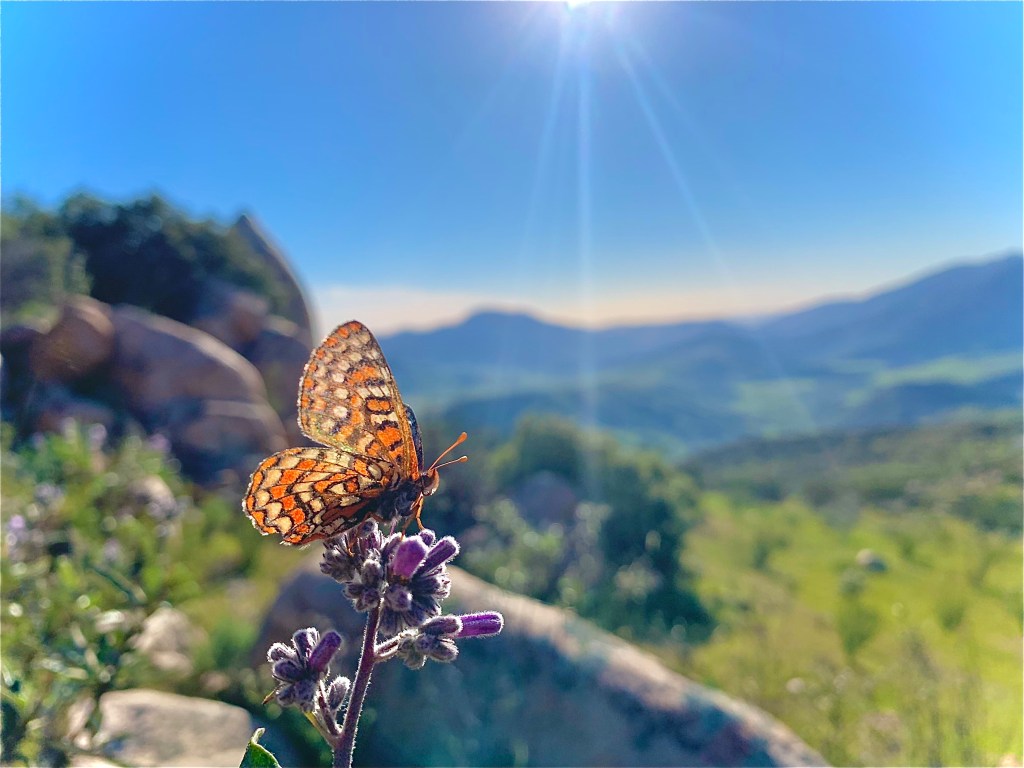
Edith’s Checkerspot (Euphydryas editha)is a particularly charismatic butterfly that occurs in colonies throughout much of southwestern North America, from southern British Columbia, Canada to northern Baja California, Mexico. Most E. editha populations are dependent on single species of host plants in their larval stage (e.g., Antirrhinum, Collinsia, Orthocarpus, and Plantago spp.). However, these host associations can evolve quickly; single populations can achieve complete host shifts in around 20 generations. This process of rapid adaptation has produced at least six distinct ecotypes of E. editha in California, each locally adapted to its host and habitat different ways. These habitats are unusually diverse for a single species, distributed from sea level to over 4,000 m elevation. Two Californian subspecies are federally endangered: E. e. bayensis, occurring in the Bay Area, and E. e. quino, occurring in Riverside/San Diego Counties and northern Baja California. Population declines over the past century have been linked to urban and agricultural development, competitive exclusion of host plants, increases in fire frequency, and a warming, drying climate.
Why the species was selected: The wide range of E. editha spans many of California’s ecosystems, making inferences of population structure and local adaptation particularly interesting. Additionally, the ecological and evolutionary distinctiveness E. e. bayensis and E. e. quino has not been evaluated using modern genomic methods. To better inform conservation efforts, whole-genome sequence data, combined with landscape and environmental modelling, will be used to assess how changes to habitat and climatic conditions are affecting habitat suitability and connectivity. Identifying local adaptation to ecological and environmental conditions will ensure that translocation and reintroduction efforts focus on extant populations that are most suitable. These research goals have been identified as key conservation needs by our U.S. Fish and Wildlife Service (USFWS) partners.
6. Hetaerina americana (American Rubyspot Damselfly)
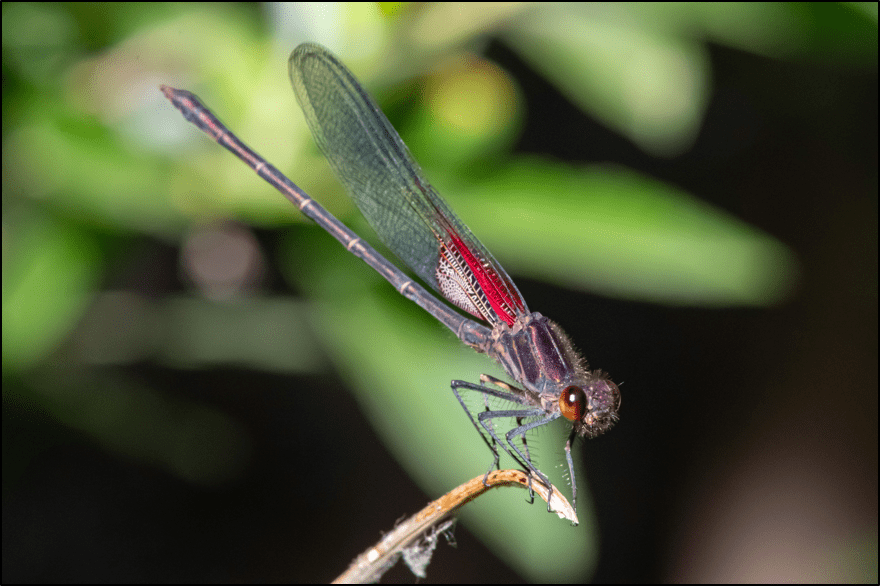
The American Rubyspot damselfly (Hetaerina americana) occurs throughout the U.S. and as far south as Nicaragua. This species is broadly found in lotic habitats – streams and rivers of all sizes, but not ponds or lakes. Adult males, with their conspicuous red wing spots, compete for mating territories in areas with submerged vegetation and flowing water, where females come to lay eggs and larvae develop. Dispersal occurs along water courses, and population persistence requires flowing water year-round.
Why the species was selected: Hetaerina americana occurs in nearly every ecoregion in California, but it is one of the Odonata species that has declined the most over the past 100 years. Further, we suspect H. americana in California may be comprised of multiple cryptic lineages, which may each require independent conservation consideration.
Landscape genomics and pest management
Many of our landscape genomic methods have been developed within the context of conservation science. However, our methods are also very applicable to the management of pest species. In collaboration with Natural Resources Canada, I am currently leading a number of landscape genomics studies on the forest tent caterpillar (Malacosoma disstria) and spruce budworm (Choristoneura spp.) to better understand their ecology and evolution. This is a necessary first step in the management of these species.

 Zac's Research Website